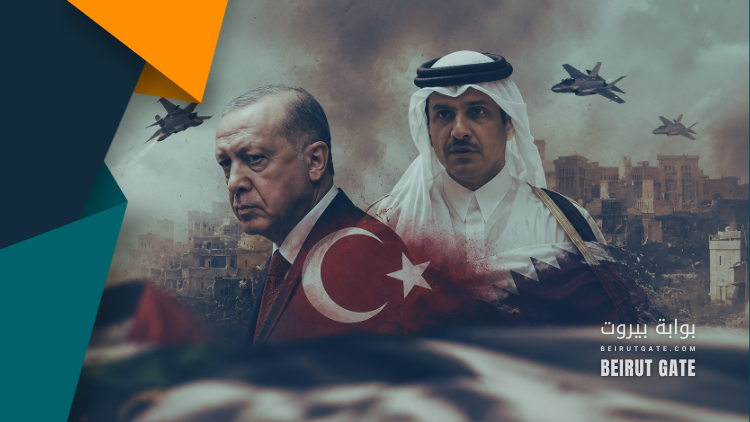
Turkish – Qatari Geopolitics and the Re-engineering of Regional Balance Mediation
A Synthesis of Maritime Security and Strategic
By Dr. Gulshan Y. Sağlam – Scholar and Academic
@GSaglum47209
The recent diplomatic movement between Turkey and Qatar reflects a deeper effort to contain escalation in the Middle East and preserve a fragile balance increasingly threatened by military confrontation, political fragmentation, and competing geopolitical agendas. In this context, the visit of Turkish Foreign Minister Hakan Fidan to Doha carried significance extending beyond bilateral coordination. The discussions formed part of a broader attempt by Ankara and Doha to strengthen diplomacy at a time when the future of U.S.–Iran negotiations remains uncertain and vulnerable to sudden deterioration.
Turkey and Qatar have gradually developed a model of political coordination based on mediation, de-escalation, and strategic partnership. While Qatar has become a trusted intermediary capable of maintaining communication with both Washington and Tehran, Turkey has positioned itself as a major geopolitical actor whose security calculations are closely tied to developments across the Middle East.
From Ankara’s perspective, the risk of state collapse in neighboring countries goes far beyond conventional foreign policy concerns. Turkish strategic thinking views instability along its borders as an existential threat, particularly if it creates space for separatist organizations seeking to establish independent entities in the region. Turkish policymakers have repeatedly identified armed Kurdish separatist movements as a direct challenge to national unity and territorial integrity. For this reason, preventing the emergence of separatist corridors in northern Syria and nearby areas remains one of Turkey’s principal strategic red lines.
This concern also intersects with Ankara’s growing alarm regarding what Turkish officials describe as expansionist projects aimed at reshaping the political geography of the Middle East. During recent consultations, Turkish leaders raised concerns about policies that could encourage prolonged instability, demographic transformation, and the weakening of central states. In several public statements, Turkish officials warned against initiatives that may contribute to widening conflict and redrawing borders under conditions of war and political disintegration.
Within this context, Turkish-Qatari coordination has evolved into part of a wider dialogue involving Saudi Arabia and Egypt. Cooperation among these actors reflects a growing belief that protecting the Middle East can no longer depend exclusively on external powers. Instead, countries in the region are seeking to maintain balance through diplomatic coordination aimed at limiting escalation and safeguarding sovereignty.
Ankara considers this cooperation essential to preventing the Middle East from entering a prolonged cycle of conflict and institutional collapse. Turkish diplomacy therefore seeks to strengthen communication between regional capitals while encouraging negotiated solutions capable of protecting collective interests. In this setting, Qatar plays an important role because of its ability to facilitate dialogue with multiple international actors, including the United States and Iran.
The strategic logic behind this diplomatic activity is also linked to maritime security and the protection of international trade corridors. Turkey’s long experience in administering the Bosphorus and Dardanelles under the framework of the Montreux Convention has reinforced Ankara’s argument that waterways can be protected through cooperative mechanisms rather than permanent foreign military guardianship.
As tensions continue to affect the Gulf region and the Strait of Hormuz, Turkey advocates a model based on negotiated security arrangements and regional cooperation. Ankara argues that the safety of maritime routes cannot be separated from wider political stability and that military escalation with Iran would carry severe consequences for energy markets, refugee movements, and economic security across neighboring states.
Turkey’s calculations are also shaped by its economic interdependence with surrounding countries. Any large-scale confrontation involving Iran would likely disrupt energy supplies, trade routes, and investment flows, creating direct pressure on the Turkish economy. At the same time, renewed instability could produce additional waves of forced migration toward Turkish territory, further complicating domestic economic and social conditions.
The Turkish-Qatari diplomatic approach also reflects principles associated with modern negotiation theory. Rather than pursuing absolute political victories, Ankara and Doha appear focused on identifying realistic areas of compromise capable of preventing wider collapse. This approach corresponds to what negotiation specialists describe as a “Zone of Possible Agreement” (ZOPA), where competing actors may still identify limited but practical common interests despite profound disagreements.
At the same time, Turkish diplomacy operates according to a clear understanding of its alternatives should negotiations fail. In negotiation theory, this concept is known as the “Best Alternative to a Negotiated Agreement” (BATNA). For Ankara and Doha, the primary BATNA remains preventing uncontrolled chaos that could emerge from the collapse of diplomacy and the expansion of military confrontation. This calculation explains why both countries continue investing heavily in mediation and coordinated diplomatic efforts despite persistent tensions.
Recent Turkish diplomacy therefore reflects a broader attempt to build a political framework capable of balancing security concerns with dialogue. Coordination with Qatar, Saudi Arabia, and Egypt demonstrates an emerging understanding among regional powers that the future of the Middle East depends on preventing further fragmentation and preserving the institutional integrity of states.
Ultimately, the current Turkish-Qatari diplomatic momentum represents more than temporary political coordination. It reflects an effort to shield the Middle East from deeper geopolitical disintegration while preserving regional influence in negotiations that directly shape the future of the region. Whether these efforts succeed in influencing the broader U.S.–Iran negotiation process remains uncertain, but they clearly demonstrate that regional powers are increasingly determined to play a central role in defining the future security architecture of the Middle East.
References :
- Republic of Türkiye Ministry of Foreign Affairs
- Ministry of Foreign Affairs of the State of Qatar
- NATO Official Publications
- International Crisis Group
- Chatham House Middle East Programme
- Brookings Doha Center Archive
- Carnegie Middle East Center
- United Nations Regional Analysis Reports
شكراً لقراءة المقال... ولا تنسى مشاركته.
إن الآراء والمواقف الواردة في المقالات والتعليقات المنشورة على منصتنا تعبّر حصرًا عن أصحابها، ولا تعكس بالضرورة رأي "بوابة بيروت" أو إدارة التحرير أو رئيس التحرير